Surgical facilities rarely feel the full impact of a staffing decision on day one. At first, everything may seem manageable. A shift gets covered, a provider is placed, and the schedule moves forward. But over time, the real cost of poor CRNA staffing decisions begins to surface.
What looked like a quick fix turns into a long-term operational problem.
This is exactly where platforms like 1MAC Anesthesia are helping facilities rethink how staffing should actually work. Instead of relying on reactive hiring or inconsistent vendors, 1MAC provides a more structured and flexible way to maintain reliable anesthesia coverage.
In high-demand markets, this difference is not optional. It directly affects performance, revenue, and patient care.
How CRNA Staffing Agencies Influence Long-Term Costs
Most facilities rely on different ways to find CRNAs quickly and maintain consistent coverage. These partnerships are critical, especially when internal hiring cannot keep up with demand.
However, not all agencies operate with the same level of consistency or alignment. When staffing decisions are made without a long-term strategy, the hidden costs begin to build.
Key Insight
At first, these costs are not always financial. They show up in operational inefficiencies that slowly affect the entire system.
In many cases, the real challenge is not access. It is how effectively facilities are able to find CRNAs who align with their scheduling and workflow needs.
Reliable staffing support can stabilize schedules and improve provider experience. But when alignment is missing, facilities often find themselves repeating the same hiring cycle without solving the underlying problem.
The Real Cost Starts with Scheduling Disruptions
One of the earliest signs of poor staffing decisions is inconsistency in scheduling. When CRNAs are not properly aligned with a facility's workflow, schedules become unpredictable. Last-minute changes become common, and operating room efficiency begins to decline.
Impact on Operations
This leads to:
- Delayed procedures that impact patient flow
- Increased pressure on existing staff to cover gaps
- Reduced utilization of surgical capacity
Critical Finding
Over time, these disruptions directly affect revenue and overall performance. Facilities that maintain consistent staffing through structured solutions like 1MAC Anesthesia are able to avoid these issues and keep operations running smoothly.
Burnout Increases Faster Than Most Facilities Expect
When staffing gaps are not handled properly, the burden shifts to the existing team. CRNAs already working within the facility are asked to take on additional cases, extended hours, or unpredictable schedules. This creates a pattern where providers are constantly adjusting instead of working within a stable system.
Burnout does not happen instantly. It builds through repeated pressure. Eventually, providers begin to disengage and look for better opportunities. At that point, the facility is not just dealing with a staffing gap. It is dealing with a retention problem.
Increased Pressure
Extended hours and additional cases burden existing staff
Staff Fatigue
Repeated pressure creates cumulative stress and exhaustion
Provider Exodus
Disengaged providers seek better opportunities elsewhere
Poor Staffing Decisions Lead to Higher Turnover
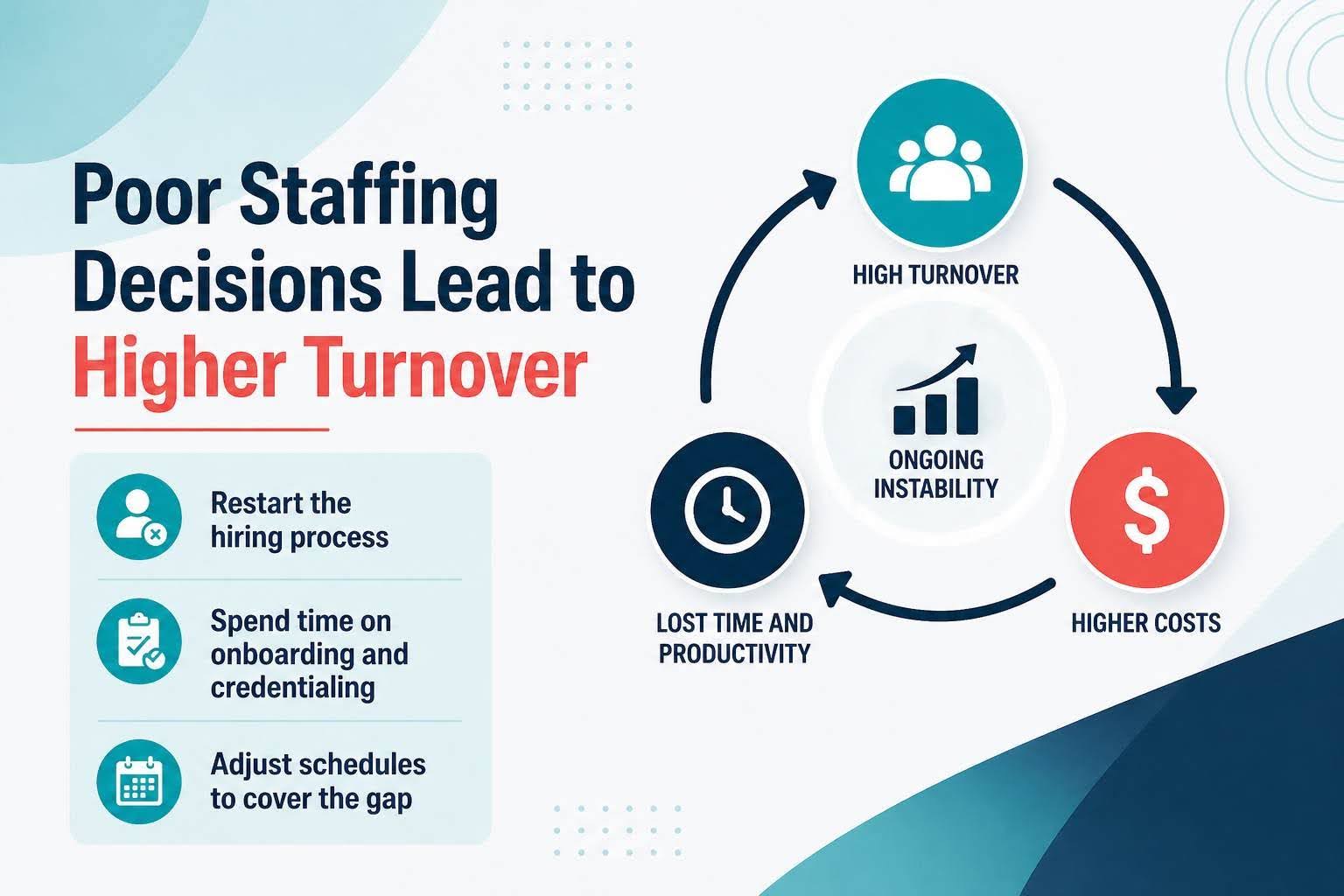
Turnover is one of the most expensive outcomes of a poor staffing strategy. Every time a CRNA leaves, the facility must:
- Restart the hiring process
- Spend time on onboarding and credentialing
- Adjust schedules to cover the gap
This cycle creates ongoing instability. Many facilities do not realize that turnover is often linked to how staffing decisions are made in the first place. When providers are placed without proper alignment, they are less likely to stay.
This is why many hospitals dealing with unreliable staffing also experience broader why hospitals struggle to retain CRNAs, especially in competitive markets where expectations are higher, and options are abundant.
Solution
Strategic staffing alignment from the start significantly reduces turnover and its associated costs.
Vendor Instability Creates Compounding Problems
Another hidden cost comes from working with inconsistent vendors. When staffing partners fail to deliver reliably, facilities are forced to constantly adjust. Communication gaps, mismatched placements, and last-minute changes create an environment where stability is difficult to maintain.
Over time, these issues compound. Facilities dealing with these challenges often face the same problems highlighted in what separates reliable CRNA staffing agencies from unstable vendors, where inconsistency in staffing leads to long-term operational strain. This is why choosing the right staffing model is just as important as filling the role itself.
Common Vendor-Related Issues
- Communication gaps between vendor and facility
- Mismatched placements that don't align with facility needs
- Last-minute cancellations or no-shows
- Lack of accountability for performance metrics
- Inconsistent provider quality and experience levels
How 1MAC Anesthesia Helps Reduce These Hidden Costs
This is where 1MAC Anesthesia provides a clear advantage. Instead of operating as a traditional vendor, 1MAC focuses on creating a more direct and flexible connection between facilities and anesthesia providers. This reduces friction and improves alignment from the beginning.
At 1MAC Anesthesia, facilities get access to:
Flexible Staffing Solutions
Adapt to real demand and changing facility needs
Faster Provider Matching
Efficient matching based on facility requirements
Clear Communication
Direct connection without unnecessary layers
Long-Term Stability
Support for both short-term coverage and lasting partnerships
By improving how staffing decisions are made, facilities can reduce disruptions, lower turnover, and create a more predictable working environment.
The Financial Impact Is Bigger Than It Looks
Many facilities focus on the immediate cost of staffing, but the long-term financial impact is often much larger.
Poor staffing decisions lead to:
- Lost revenue from delayed or canceled procedures
- Increased overtime costs for existing staff
- Higher recruitment and onboarding expenses
Key Takeaway
These costs are rarely tracked together, which makes them easy to underestimate. Facilities that adopt structured staffing solutions are able to control these variables more effectively. Stability in staffing leads to stability in revenue.
Building a Smarter Staffing Strategy
The difference between stable and unstable operations often comes down to how staffing is approached.
Facilities that continue to rely on reactive decisions will keep facing the same challenges. Those that shift toward a more structured and flexible model are able to build long-term stability. This is exactly what 1MAC Anesthesia supports.
Instead of forcing providers into rigid systems, it allows facilities to adapt based on real-world conditions. This creates an environment where providers are more engaged, schedules are more predictable, and operations run more efficiently.
Strategic Planning
Long-term approach to staffing needs
Flexible Implementation
Adaptable to real-world facility conditions
Provider Engagement
Better satisfaction and retention outcomes
Operational Efficiency
Predictable schedules and smooth operations
Take Control Before Costs Continue to Grow
The hidden costs of poor CRNA staffing decisions do not stay hidden for long. They eventually show up in scheduling delays, provider turnover, and financial strain. The longer these issues continue, the harder they become to fix.
At 1MAC Anesthesia, facilities get access to a smarter approach to staffing. One that focuses on alignment, flexibility, and long-term results.
If your facility is dealing with ongoing disruptions, now is the time to rethink how staffing decisions are made. Because in high-demand markets, the cost of doing nothing is always higher.
Take Action Today
Contact 1MAC Anesthesia to explore how structured staffing solutions can transform your facility's operations and financial performance.